Environmental degradation and transport emissions
Transport is a leading source of emissions, and no capital market route turns clean vehicles into investable, tradable, tokenized assets.
Answered byVSM™ · MIOS™
DTON Group is developing four connected economic systems that let ordinary people own, finance and operate productive tokenized vehicles, train for the work, and move on infrastructure built for clean energy. It starts from a real operating record in Nigeria.
Who we are
DTON Group Inc. is a next-generation climate technology and economic infrastructure company building the economic systems, infrastructure, institutions and backbone of a new, green, inclusive and resilient global economy.
Positioned at the nexus of
DTON Group is engineering a global ecosystem that unites environmental sustainability with economic freedom and growth.
Our purpose
Advancing Humanity.
Preserving Our Planet.
That is the group’s motto. Its Human Trinity, The People, The Planet and The Future, is how every DTON system is judged.
Ownership, skills and income for the people who do the work.
Clean mobility and clean energy, measured and reported.
Institutions, technology and infrastructure built to last.
The problem
These crises compound each other. Policy reform alone does not close them, because the gap is structural. This is what DTON Group is solving.
Transport is a leading source of emissions, and no capital market route turns clean vehicles into investable, tradable, tokenized assets.
Answered byVSM™ · MIOS™People earn through vehicles and tools they never own, so income does not become assets or wealth.
Answered byVSM™ · WEEF™Cities grow faster than the infrastructure that moves their people, and nothing governs it as one system.
Answered byMIOS™Electric mobility needs reliable power, and in many markets the grid and charging cannot yet provide it.
Answered byMIOS™Training and credentials do not reliably lead to real work, equipment or income.
Answered byWEEF™The green and digital economy needs technical skills that existing training does not guarantee.
Answered byWEEF™Platform and informal work generates income without ownership, finance or economic agency.
Answered byVSM™ · WEEF™ · T-a-C™The DTON New Economy Initiative™ answers all seven with four economic systems.
Explore the InitiativeThe solution
The Initiative is DTON’s answer to the seven crises. It is structured in layers: four economic systems answer the crises, four industries form the markets, and seven subsidiaries carry the work out.
Transport emissions, the ownership gap, urban infrastructure overload, energy poverty, the education-to-opportunity disconnect, workforce skill gaps and the disempowerment of informal and gig workers.
A founding institutional programme: structured, phased and anchored in governance. Its objective is to create and mature four new economic systems, and the industries that form around them.
The institutions that carry the Initiative out, each with its own mandate.
Each system has its own industry and its own operating subsidiaries. They share data, capital, workforce and infrastructure.
MAACMobility-as-an-Asset-Class
t2EFTraining-to-Economic-Freedom
PWOSPhysical World Operating System
IMCIn-Motion Commerce
The record
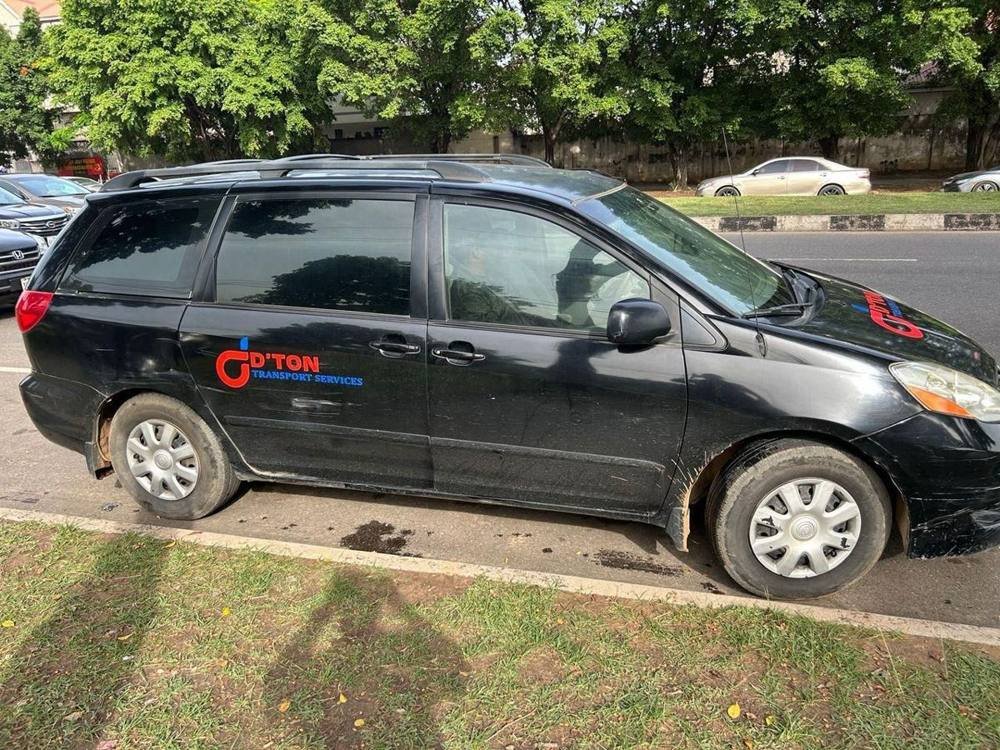
These are historical figures from the DTS operating record. An independent review of the record is the first thing the Foundation Readiness Program funds. The technology and the four-system architecture still need validation. See the full evidence, and what is not yet proven
The market
In DTON’s base-case model, the four revenue markets total $6.66T from 2026 to 2035. DTON’s model can serve $274.9B of it.
The figures come from DTON’s own bottom-up revenue model, built subsidiary by subsidiary, city by city and phase by phase.
Projections and assumptions, not forecasts or guarantees.
DTON proceeds in order: readiness, a pilot of 700+ deployed and 850+ listed vehicles in Austin and Benin City, then three phases of growth.
Each step goes ahead only if the evidence from the one before supports it.
A $1M non-dilutive Catalyst Grant funds a six-month readiness program, offered in four versions.
Qualified investors can ask for the investor materials, shared under confidentiality.
Cities, utilities, manufacturers, universities and development organisations.
See what the platform is meant to change for people who earn from mobility.

Founder, Chairman, President and Group CEO

Founding Director, COO, Vice President and Corporate Secretary
The grant proposals, the Master Capital Case and the Inception business plan are shared on request. Tell us who you are and what you need.